Social Media and Staff


I presented on Tuesday at an event organised by OurSocialTimes, Social Media for CEOs.  My session was on social media and staff.


Here are the points I made to this audience of senior execs and CEOs:

  • Introduction / my focus
    • My background in HR and human capital
    • My additional focus on social capital (rather than just social media) generated by an increasing recognition of the importance of teams rather than just individuals
    • Organisations still tend not to focus on social capital – why?  One reason is that they do actually need to develop human capital before they can effectively develop social capital.  People need to know themselves before they can understand others.  People need to respect each other as individuals.  If not, organisations get anchored in “what’s in it for me”, rather than" “what’s in it for us” which stops true social collaboration.
    • So the first reason CEOs need to pay attention to social media and staff is that they need to focus on HR first.
  • Importance of social capital
    • The second reason is that true social support for customers and marketing etc require effective social relationships between employees.  Yes, you can try to do it initially with one person in a room.  But at some stage you need all your employees collaborating to support customers.  Eg Best Buy’s Twelforce developed out of their initial Blue Shirt Nation which developed collaboration between managers and employees.
  • Integration of social business / HR
    • The third reason is that this all links.  At least at the highest levels of value.  Social recruiting, learning and other applications can be used for just reducing costs, or providing better quality people but the focus should really be on organisational social outcomes eg connections build during recruitment supporting effectiveness post joining (eg Goldman Sachs), the learning organisation etc.  So both social HR and social business are ultimately focused on the same thing – building social capital ie effective (or even competitive) collaboration, innovation, speed to delivery etc through social relationships.
    • Or just from an activity perspective, if you want your people to use social media with customers, it’s going to be useful to hire people who are already using social media.
  • Example – social recruiting
    • Opportunities to replace push based,, traditional recruitment, to pull candidates through sourcing etc, and to create social relationships and potentially communities.
  • Social media and the employee lifecycle
    • Opportunities exist throughout the employee lifecycle.  Even in areas like reward which is probably the least natural area given that the focus in most organisations is to keep reward secret, not transparent.  But there are still opportunities to eg use wikis to help engage employees in payroll changes.  Or more broadly, think about reducing pay differentials (I skipped over this fairly quickly given that I was talking to a CEO group), or probably more simply, but still not easily, work towards pay transparency.  (Also look at examples of radical reward management like Semco.)
  • Social media and HR risks


I also suggested the fourth reason CEOs need to focus on social media and staff is that they’re struggling to get HR people engaged in social collaboration (enterprise 2.0 etc), they can point out the opportunities inherent in social recruiting etc, and get their HR people engaged in social media through this.

What do you think – did I get the key benefits right?  And what conversations have you been having with your CEO on social media and staff?


  • Consulting  - Research - Speaking  -  Training -  Writing
  • Strategy   -  Team development  -  Web 2.0  -  Change
  • Contact  me to  create  more  value  for  your  business
  • jon [dot] ingham [at] social [dash] advantage [dot] com

.

READ MORE - Social Media and Staff

How to develop an HR Scorecard


   I’m just back from an HR measurement workshop in Barcelona.  In this session, I explained to participants how to measure their HR and management strategies through an HR scorecard.  I also warned them that my version of the scorecard is substantially different, and a lot more useful, than some of the other formats they may encounter.

However, in these workshops, I always find that I run out of time to explain why I don’t like these other formats, and why participants should avoid using these in their organisations.  So I thought I’d upload these slides in slideshare and my workshop participants, and you, can now find these here.


Actually there are other types of scorecard too eg one of the participants’ scorecards involved a split between project management and service delivery. I thought this was interesting as this is exactly the split I made when I introduced scorecards as an HR Director at Ernst & Young. Our perspectives were:

  • Project management (of ongoing projects eg performance / salary reviews)
  • Project management (of development projects – requiring additional scoping)
  • Service delivery
  • Relationship management


These perspectives aren’t based on a strategy map which is what I suggest organisations need to use, so they don’t provide the sort of benefits my framework does, but at least they don’t do any harm – which is exactly what the other sorts of scorecard I discuss in the Slideshare presentation can do!

(The need to think about the distinction between these four forms of activity is one of the things I still always emphasise in my HR business partner training as well.)


Note: for further information on how you use the HR scorecard format I recommend, contact me to run a measurement workshop for you own in-house team!


  • Consulting - Research - Speaking  - Training -  Writing
  • Strategy  -  Talent  -  Engagement  -  Change and OD
  • Contact  me to  create more  value for  your business
  • jon  [dot] ingham [at] strategic [dash] hcm [dot] com

.

READ MORE - How to develop an HR Scorecard

Looking forward to #CHRU-3: HR in the New World of Work


ch6-4horsemen_pastorpack_small   I posted again recently on some forthcoming unconferences, and I’m pleased that we are now taking bookings for CHRU (Connecting HR Unconference) – 3.

The core theme for this unconference is: The New world of work (and non-work perhaps).

This theme emerged when a few of us met up last week to start some early planning for the event.  We must have been feeling quite gloomy about the economy and the broader picture, for example with the riots in the UK, because we started to talk about things like ‘post apocalypse HR’ (hence the picture of the four HR horsemen) – but then decided that we may only just be entering the apocalypse!

Err.  I guess with hindsight we may have got a little carried away, but I don’t think there’s any doubt that things have changed – and that organisations need to try to find new ways to engage their people and take broader action to deal with changes in employment, and in the wider society too.

For example, what should HR be doing about the 972,000 jobless 16 to 24 year-olds in the UK – an unemployment rate of 19% (still a  lot less than the 44% youth unemployment in Spain where I am now – and I guess for them, the world really does feel pretty apocalyptic).

So at our unconference, we’re going to encourage people to talk about things like:

  • Are existing organisation models sustainable in a new economic future?
  • What is the future model of 'employment'?


And of course, lots of other things too… (our theme provides some guidance and focus, but it’s not intended to be exclusive).

If you’d like to join us in the conversation, you can book at chru3-eventbrite.com.  Hope to see you at the Spring!  And do join us at connectinghr.org too!


  • Consulting - Research - Speaking  - Training -  Writing
  • Strategy  -  Talent  -  Engagement  -  Change and OD
  • Contact  me to  create more  value for  your business
  • jon  [dot] ingham [at] strategic [dash] hcm [dot] com

.

READ MORE - Looking forward to #CHRU-3: HR in the New World of Work

Do we need Managers?


   I’ve been at the Economist today, reviewing this Summer’s Talent Management Summit, and starting to develop the focus for next year’s event (scheduled for 12th June 2012).
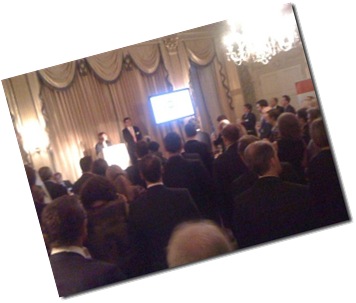
We discussed a lot of different things, which due to Chatham House rules I can’t discuss, but I’m hopefully OK to comment on my own contributions…

At one point we were discussing the development of leaders, and the differences to that of managers etc.  I noted the interesting dynamic that will be raised as the role of line manager gradually disappears.

Again, I can’t comment on what some of the HR leaders there said, but I will note this didn’t get a particularly positive response.  And I don’t want to single out the people in the room, but I do wonder whether HR Directors in general are thinking radically enough?

Actually, I think there’s evidence for this need in the Economist magazine this week.  In their great report on the future of jobs, they note the rise of the open sourced economy:

“To understand why these changes are so exciting for some people and so scary for others, a good place to start is the oConomy section on the website of oDesk, one of several booming online marketplaces for freelance workers. In July some 250,000 firms paid some 1.3m registered contractors who ply their trade there for over 1.8m hours of work, nearly twice as many as a year earlier.

ODesk, founded in Silicon Valley in 2003, is a “game-changer”, says Gary Swart, its chief executive. His marketplace takes outsourcing, widely adopted by big business over the past decade, to the level of the individual worker. According to Mr Swart, this “labour as a service” suits both employers, who can have workers on tap whenever they need them, and employees, who can earn money without the hassle of working for a big company, or even of leaving home.

It is still small, but oDesk shows how globalisation and innovation in information technology, the two big trends that have been under way for some time, are moving the world.”


If we don’t need jobs, we certainly don’t need managers! (and I still believe that even more traditional organisations will increasingly do away with managers as well).

So how do we develop leaders if people increasingly aren’t getting experience working as managers first?


  • Consulting - Research - Speaking  - Training -  Writing
  • Strategy  -  Talent  -  Engagement  -  Change and OD
  • Contact  me to  create more  value for  your business
  • jon  [dot] ingham [at] strategic [dash] hcm [dot] com

.

READ MORE - Do we need Managers?

#HRMI Most Influential Thinker


   I’m still recovering from a great event at Claridge’s last night where HR Magazine presented their new lists of HR Most Influentials.  I was really pleased to find that I’d been included in the list of Top 25 HR Most Influential HR Thinkers, at #23.


It’s my first time on the list, and the first time a blogger has been included on it - not that my influence is confined to this blog (there’s also my consulting, speaking, training and writing etc), but the comments submitted by the magazine’s readers seem to suggest that my blog is where most of my influence is being generated:

"He is the top HR blogger"

"A productive commentator with great insights"


And this is why, that whilst there is a great group of other thinkers on the list as well (as well as another list of international thinkers, and one of influential practitioners), I do worry about how many of these will be able to stay on the list in future.  If they’re not using social media, they’re soon going to find themselves passed over by those who do.

And currently they’re not – for example, other than me, there was only HR Magazine and Benjamin Reid from The Work Foundation tweeting last night.  (Lynda Gratton who topped the thinker list does tweet – and it was noted that ‘her tweets really make you think’ – but they’re not really very ‘social’, ie there’s not much sign of conversation in her twitter stream).


Anyway, what I really wanted to write was thanks for your support in reading this blog, and particularly for those of you who voted for me.  It’s always nice to receive an award but it’s really motivating to know you think I’m influential*.  (By the way, it’d be very interesting to know just how I have influenced you!).

Also my thanks to HR Magazine for a great event, with the chance to meet other HR influencers such as Patrick Wright (I’ll be reviewing his new book, the CHRO soon), and for giving their readers the opportunity to vote for me.


Also see:


* And just to show you that I mean this, I’m going to break my blogger’s block and start posting daily again.  So see you back here soon!


  • Consulting - Research - Speaking  - Training -  Writing
  • Strategy  -  Talent  -  Engagement  -  Change and OD
  • Contact  me to  create more  value for  your business
  • jon  [dot] ingham [at] strategic [dash] hcm [dot] com

.

READ MORE - #HRMI Most Influential Thinker

HR Directors Summit and Unconferences


   Is it really September already?  Time to get sorting out those Christmas cards and planning my New Year resolutions then!

Perhaps not!  But one event I am already looking forward to in the New Year is the HR Director’s Business Summit in Birmingham.  This is partly because of the usual stellar line-up of speakers including Ed Lawler (one of the co-authors, along with me, of ‘Integrated Talent Management’) on one of his rare trips to the UK.
.
And partly because I’m going to be helping WTG with an unconference.  We’re going to be running four un-sessions in tandem with the main conference and have an un-plenary at the end of the main conference to share and further discuss all of our reflections and ideas.
 
Should be really neat!

(If you can’t wait till then, ConnectingHR’s next unconference will be on Thursday 20th October – details going up at connectinghr.eventbrite.com in the next few days.)
 
 
I’ll also be attending, and blogging from, HRevolution being held in Las Vegas Just before HR Tech.


  • Consulting - Research - Speaking  - Training -  Writing
  • Strategy  -  Talent  -  Engagement  -  Change and OD
  • Contact  me to  create more  value for  your business
  • jon  [dot] ingham [at] strategic [dash] hcm [dot] com
.
READ MORE - HR Directors Summit and Unconferences

Social Media in Asia


   One of the reasons that I’m so pleased to be delivering this HR and social media workshop in Kuala Lumpur is that I’m really interested in how social technology is developing in Malaysia and the rest of Asia.


From one perspective, it doesn’t seem that there’s much happening there – evidenced by the lack of HR bloggers in Asia (outside India) that I mentioned recently.

One the other hand, usage is clearly growing quickly.  For example, commenting on the displayed infographics from Burston Marsteller, Digital Buzz notes:

“Internet usage is sky-rocketing throughout the Asia-Pacific region, obviously making the growth of social media the fastest in the world, as you’ll see, it’s not all about Facebook, but it still leads the way across the region, at least for now. This is a nice collective Infographic from Burson-Marsteller.”


And I thought these comments in The Marketer were also very interesting:

“After a sluggish start, Chinese usage of social networks is leapfrogging pretty much every country in the world.  More than 200 millsion Chinese now have a social network account, and eMarketer forecasts that this will reach almost 488 million by 2015.  In terms of time spent online and intensity of engagement, Chinese social networks boast astonishing metrics.

China’s version of Twitter, Weibo launched as recently as August 2009.  Yet the top Weibo stars now boast more fans that Twitter’s leading celebrities.  Instant messaging platform QQ has more than 600 users, who regard it as their day-to-day e-mail platform.

Jerry Code, the Shanghai based head of cultural insight for WPP-owned marketing agency Value Added, says social networking is changing the fabric of Chinese culture.  ‘The impact has been massive – arguably more than in the West,  The changes in Chinese society have been so dramatic because people are used to change, which means the adoption of technology and social networks is much faster.  People of all ages are jumping into it.’ ”


The different languages, alphabets and technologies used in China and other Asian countries is clearly one reason it’s difficult to keep track with Asian thinking about HR through social media.  But with Google Translate and other tools it shouldn’t really be that difficult.

So I’m still not sure why there’s a disconnect between Asian usage of social media, and external use by Asian HR people.

Any thoughts?


  • Consulting - Research - Speaking  - Training -  Writing
  • Strategy  -  Talent  -  Engagement  -  Change and OD
  • Contact  me to  create more  value for  your business
  • jon  [dot] ingham [at] strategic [dash] hcm [dot] com

.

READ MORE - Social Media in Asia